
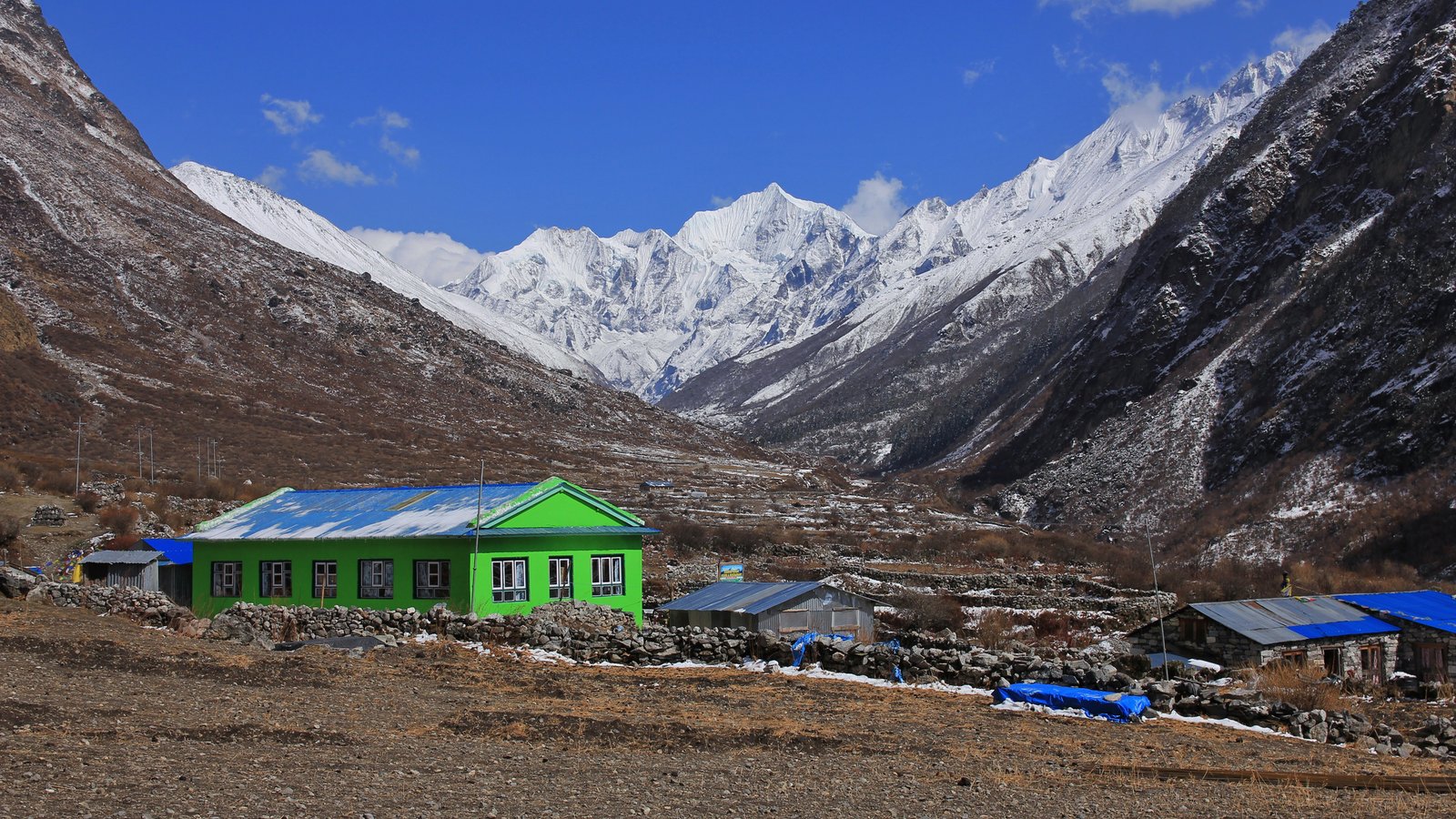
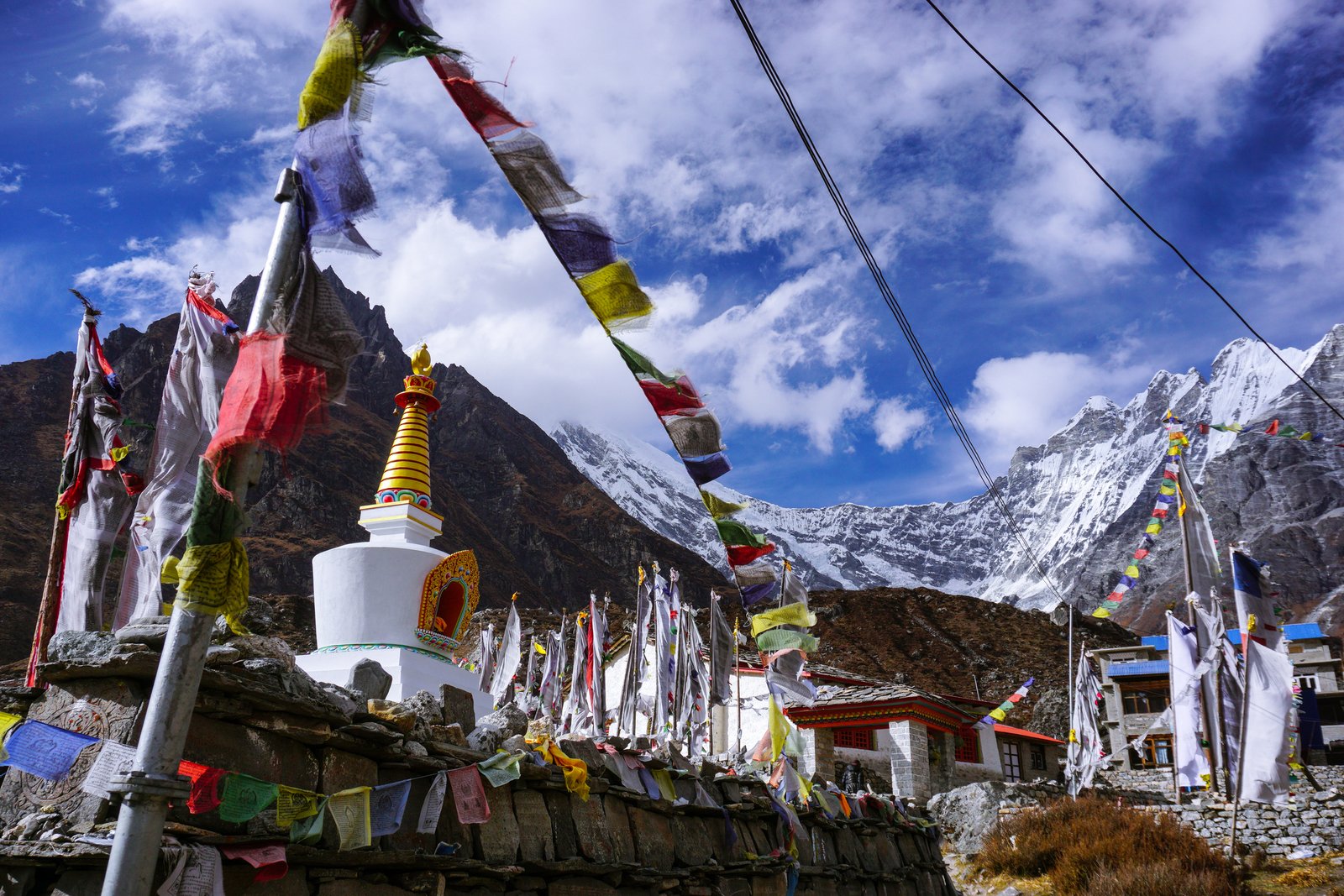
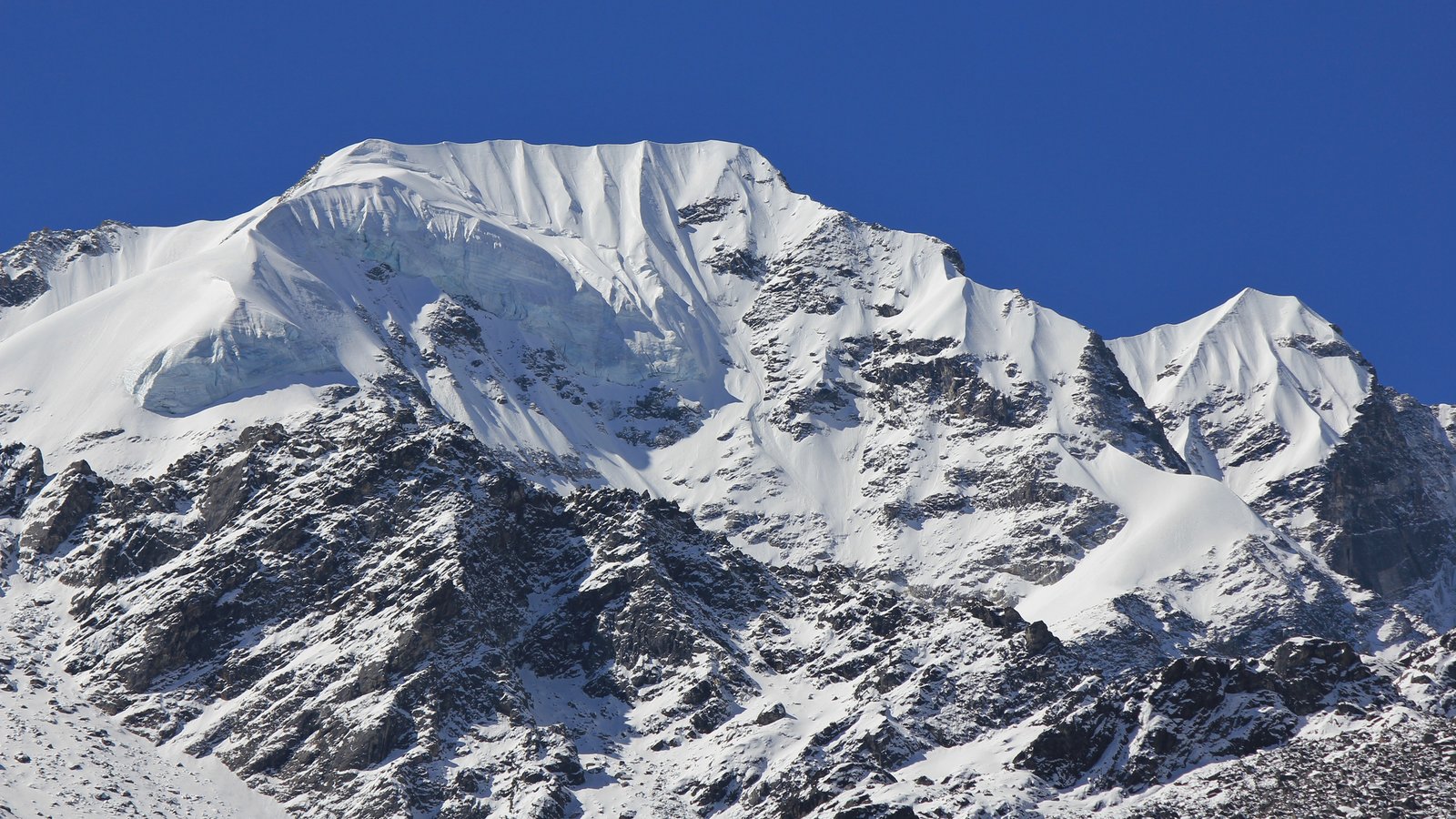
The Langtang Valley and Gosainkunda Trek is a scenic Himalayan journey through Langtang National Park, rich in alpine forests, wildlife, and dramatic mountain landscapes. The trek includes the adventurous ascent of Tserko Ri for panoramic Himalayan views and continues to the sacred Gosainkunda Lake, blending pure nature, high-altitude adventure, and cultural pilgrimage in the heart of the Himalaya.
-
Kathmandu
-
Kathmandu
-
Spring & Autumn
-
Hotel & Lodge
-
Car, Jeep & Bus
-
4,985 Meters
-
Meals on Trek
-
English, Spanish
-
NHT-244
-
02-16 People
-
All Trek Permits
-
Fully Guided Tour
Overview
The Langtang Valley and Gosainkunda Trek is one of Nepal’s most rewarding trekking routes, combining dramatic Himalayan mountain landscapes with deep cultural and spiritual significance. The trek begins in Syabrubesi, a small riverside town north of Kathmandu, and gradually ascends through Langtang National Park, passing dense forests of oak, rhododendron, and bamboo while following the Langtang River deep into the Langtang Valley.
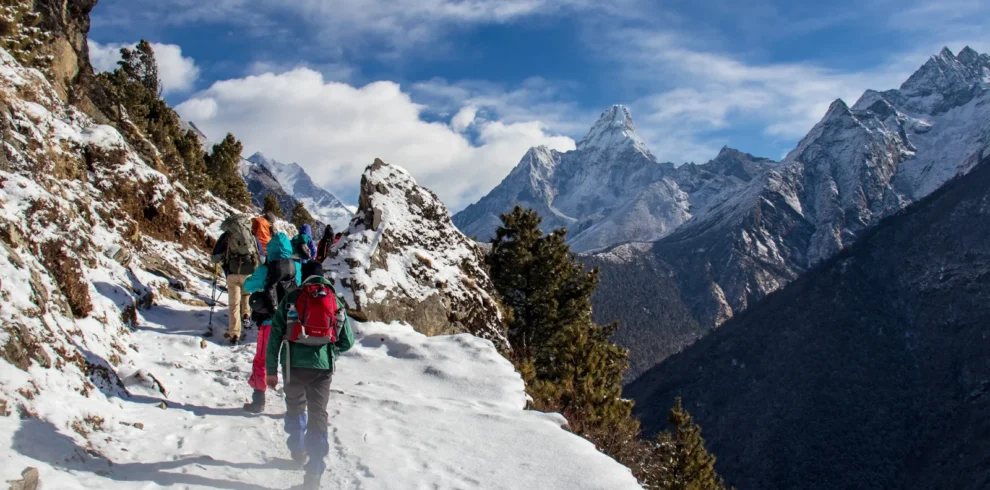
As the trail climbs higher, traditional Tamang villages appear, offering authentic insight into local Himalayan life shaped by Tibetan culture. Langtang Village and Kyanjin Gompa form the cultural heart of the valley, surrounded by snow-capped peaks, glaciers, and wide yak pastures. A rewarding side hike to Tserko Ri provides one of the best panoramic viewpoints in the region, revealing sweeping views of Langtang Lirung and the surrounding Himalayan ranges.
Leaving the valley, the route transitions into high-altitude alpine terrain, crossing the Lauribina Pass region and continuing toward the sacred Gosainkunda Lake. This holy alpine lake complex is revered by both Hindus and Buddhists and plays an important role during major religious festivals. The crystal-clear glacial lakes, set against rugged mountain backdrops, create one of the most peaceful and photogenic sections of the trek.
The journey offers excellent acclimatization, diverse trekking landscapes, and a quieter alternative to Nepal’s busier trekking routes. Throughout the trek, comfortable teahouse accommodation provides warm meals and genuine local hospitality, keeping the experience accessible while still adventurous. The trail completes a scenic circuit trek, returning to Syabrubesi and delivering a rich and satisfying Himalayan experience.
Ideal for trekkers seeking natural beauty, high-altitude adventure, and meaningful cultural and spiritual landmarks, the Langtang Valley and Gosainkunda Trek showcases the very best of the Langtang region in a single unforgettable journey.
Trip Highlights
- Diverse trekking landscapes ranging from lush valleys to high alpine passes and glacial lakes.
- Journey to sacred Gosainkunda Lake, a revered pilgrimage site set at high Himalayan altitude.
- A complete circuit trek starting and ending in Syabrubesi with comfortable teahouse accommodation.
- Cultural encounters in traditional Tamang villages, shaped by Tibetan heritage and mountain lifestyles.
- Exploration of Kyanjin Gompa, surrounded by glaciers, yak pastures, and towering snow-capped peaks.
- Scenic trek through Langtang Valley featuring alpine forests, flowing rivers, and dramatic Himalayan scenery.
- Panoramic sunrise views from Tserko Ri, overlooking Langtang Lirung and the surrounding Himalayan ranges.
Tour Itinerary
The offered itinerary on this website is carefully planned; however, it may be subject to minor adjustments. The sequence of sightseeing, scheduled touristic activities, attractions, and accommodations may be modified due to weather conditions, local circumstances, or other factors beyond the control of our trusted local travel partner in Nepal. Any adjustments will always be made with the highest priority on guest safety, comfort, and the overall quality of the travel experience.
Your Annapurna journey begins in Kathmandu (1,400 m/4,593 feet). Upon arrival at Tribhuvan International Airport, a representative of Jagadamba Holidays will welcome you, holding a clearly marked sign displaying the “Natura Himalaya Tours” name and logo. From the airport, you will travel to Thamel, the city’s main tourist district, with the drive covering approximately 7 km and usually taking 30 minutes to one hour, depending on traffic. Once you arrive at the hotel, the rest of the time is yours to relax or step outside and experience the atmosphere of Kathmandu’s historic streets, cafés, and local shops.
In the afternoon or early evening, you will meet our local partner and tour coordinator, Mr Narendra Bohara, at the hotel for a personal orientation session. During this meeting, the trekking plan will be discussed, your local trekking guide will be introduced, necessary travel procedures will be completed, and any remaining arrangements finalised. The remainder of the day is left free, allowing you to rest after your journey and slowly adjust to the rhythm of Nepal’s capital city. Overnight stay at Kathmandu Guest House or a hotel of similar standard in Thamel, with breakfast included.
After a hearty breakfast at the hotel in Kathmandu, the journey begins along a scenic mountain highway through a hilly landscape, heading towards Syabrubesi (1,503 metres / 4,931 feet), the main gateway to the Langtang region. The route covers approximately 122 kilometres and typically takes 6–7 hours by road, depending on traffic and weather conditions. As the drive moves away from the capital, urban surroundings gradually give way to green hills, terraced farmland, and small rural settlements.
For much of the journey, the road follows the Trishuli River, offering views across river valleys and surrounding terrain. On clear days, distant views of Ganesh Himal (7,422 metres / 24,350 feet), Langtang Lirung (7,227 metres / 23,711 feet), and other Himalayan peaks can be seen along the way. Short stops may be made in towns such as Trishuli Bazaar and Dhunche (1,960 metres / 6,430 feet) for refreshments and basic facilities.
The final section of the drive follows winding mountain roads before reaching Syabrubesi. Overnight accommodation is arranged at Royal Himalaya Hotel or a hotel of similar standard, providing a comfortable place to rest after the journey. With the support of a professional local Nepalese guide from a trusted local partner, the trip is managed safely and professionally throughout the journey, allowing travellers to begin their Langtang experience in a calm and well-prepared setting.
After a hearty breakfast at the lodge in Syabrubesi, the day’s trek begins along the designated mountain trail towards Sherpagaon, passing through the traditional Tamang village of Khangjim (2,280 metres / 7,480 feet) and continuing via Surkra village. The route follows forested hillsides, terraced farmland, and small rural settlements, with intermittent views of the Langtang River and surrounding Himalayan slopes, making this section a representative day on the Langtang Valley trekking route.
The trek from Syabrubesi to Sherpagaon via Khangjim and Surkra village covers approximately 10.1 kilometres and typically takes 5 to 6 hours to complete, depending on pace and trail conditions. During the day, the route involves a total ascent of around 1,300 metres and a descent of about 190 metres, placing it among the moderately demanding days on a Langtang trekking itinerary. As altitude is gained, forest paths gradually open to wider valley views, reflecting the varied landscapes characteristic of trekking in the Langtang region of Nepal.
The day concludes on arrival at Sherpagaon, situated on a scenic ridge at an altitude of 2,563 metres / 8,409 feet. The village offers a quiet setting with broad views across the Langtang Valley and surrounding Himalayan terrain. Overnight accommodation is arranged at Namaste Guest House or a lodge of similar standard, providing a simple and comfortable stay. The trek is supported by a professional local Nepalese guide, ensuring a safe, well-organised, and reliable trekking experience.
After a hearty breakfast at the lodge in Sherpagaon, the day’s trek begins along the designated mountain trail towards Thangsyap, forming part of the well-known Langtang and Gosainkunda trekking route. The trail descends and then gradually ascends through forested terrain, passing through settlements such as Lama Hotel (2,480 metres / 8,136 feet) and Ghodatabela (3,030 metres / 9,941 feet). Walking alongside the Langtang River, the route moves through oak, pine, and rhododendron forests, offering a strong sense of trekking in the heart of the Langtang Valley.
The trek from Sherpagaon to Thangsyap via Lama Hotel and Ghodatabela covers approximately 11.6 kilometres and typically takes 5 to 6 hours to complete, depending on pace and trail conditions. During the day, the route involves a total ascent of around 810 metres and a descent of about 200 metres, making it a moderate and well-balanced trekking day. The trail crosses several suspension bridges and passes small settlements such as Rimche and Bamboo, where trekkers may encounter local Tamang communities and observe daily village life. Forest sections also provide opportunities to spot Himalayan wildlife, including langurs, red pandas, and a variety of bird species.
The day concludes on arrival at Thangsyap, located at an altitude of 3,140 metres / 10,433 feet. Set among open meadows and terraced fields, Thangsyap offers wide views across the upper Langtang Valley and surrounding Himalayan peaks. Overnight accommodation is arranged at Buddha Guest House or a lodge of similar standard, with meals including breakfast, lunch, and dinner provided. The trek is supported by a professional local Nepalese guide, ensuring a safe, well-organised, and rewarding trekking experience.
After a hearty breakfast at the lodge in Thangshyap, the day’s trek begins along the designated mountain trail towards Kyanjin Gompa, one of the most important destinations on the Langtang Valley Trek and Langtang–Gosainkunda trekking route in Nepal. The trail gradually ascends through alpine terrain, passing remnants of Langtang village, which carries visible reminders of past natural disasters and adds historical context to the journey. Throughout the walk, trekkers are rewarded with expansive views of Himalayan landscapes and surrounding high-altitude valleys.
The trek from Thangshyap to Kyanjin Gompa covers approximately 10.5 kilometres and typically takes 4 to 5 hours, depending on pace and trail conditions. The route involves a total ascent of around 720 metres and a descent of about 50 metres, making it a moderate trekking day suitable for acclimatisation. The trail winds through forests of pine, oak, and rhododendron, crosses small streams, and passes terraced fields while following the upper course of the Langtang Valley. Along the way, clear views of Langtang Lirung (7,227 metres / 23,711 feet) and surrounding snow-capped Himalayan peaks provide excellent opportunities for photography and nature appreciation, reinforcing the appeal of Nepal Himalayan trekking.
The day concludes on arrival at Kyanjin Gompa, situated at an altitude of 3,830 metres / 12,566 feet. Set in a wide alpine basin and surrounded by dramatic Himalayan peaks, Kyanjin is a peaceful mountain village and a key acclimatisation stop on the Langtang trek. The village is home to the historic Kyanjin Gompa, adding cultural significance to the stay. Overnight accommodation is arranged at Namaste Guest House or a lodge of similar standard, with meals including breakfast, lunch, and dinner provided. Supported by a professional local Nepalese guide, this stage offers a well-balanced combination of trekking, cultural insight, and high Himalayan scenery, setting the tone for the next phase of the Langtang and Gosainkunda adventure.
After an early start at the lodge in Kyangjin Gompa, we began our extra day with a special trek to Tserko Ri, one of the most rewarding high-altitude viewpoints in the Langtang Valley. Starting from Kyangjin Gompa (3,870 metres / 12,697 feet), the day’s trek follows the trail above the village, gradually ascending through alpine meadows and yak pastures. With no tea houses along the route, this excursion is planned as a full-day hike, while those preferring a quieter pace may remain in Kyangjin Gompa for acclimatisation, rest, and short local walks.
The round-trip trek to Tserko Ri covers approximately 9.6 kilometres and generally takes 8 to 9 hours, depending on walking pace and weather conditions. The route involves a total ascent and descent of around 1,090 metres, making it a challenging yet manageable high-altitude day. As the trail gains elevation, the landscape opens to expansive views of Langtang Lirung (7,227 metres / 23,711 feet), Langshisa Ri (6,427 metres / 21,086 feet), and a wide range of snow-covered Himalayan peaks, highlighting the dramatic scenery of trekking in the Langtang region.
From the summit of Tserko Ri (4,985 metres / 16,355 feet), panoramic views extend across the Langtang Valley, nearby glaciers, and the Himalayan range stretching towards Tibet. This high vantage point offers a calm and rewarding moment before the descent back to Kyangjin Gompa, which typically takes 2–3 hours. Overnight accommodation is arranged at Namrung Guest House or a lodge of similar standard, with meals including breakfast, lunch, and dinner provided. Supported by a professional local Nepalese guide, this extra day combines acclimatisation, high-altitude trekking, and outstanding Himalayan scenery, making it a highlight of the Langtang Valley trekking experience.
After an early start at the lodge in Kyangjin Gompa, the day begins with a sunrise hike to Kyangjin Ri (4,779 metres / 15,679 feet), one of the most respected viewpoints in the Langtang Valley. The short but rewarding hike covers approximately 2.48 kilometres round trip and usually takes 2–3 hours, with a steady ascent through cool morning air. From the summit, wide Himalayan panoramas unfold, including views of Langtang Lirung, surrounding glaciers, and the upper Langtang Valley, offering a quiet and memorable start to the day. After taking time to enjoy the views, the trail descends back to Kyangjin Gompa for breakfast.
Following breakfast, the trek continues from Kyangjin Gompa towards Lama Hotel (2,480 metres / 8,136 feet), retracing the main Langtang Valley trekking route. The trek from Kyangjin Gompa to Lama Hotel covers approximately 18.4 kilometres and typically takes 6–7 hours to complete. The route involves a modest ascent of around 50 metres and a descent of approximately 1,420 metres, making it a predominantly downhill walking day. The trail passes through alpine terrain before re-entering forested sections, following the Langtang River as it flows through the valley.
As the trail descends, the landscape gradually changes to rhododendron and oak forests, with occasional views of Tamang villages and cultivated fields along the valley floor. This section of the Langtang Valley trek offers a quieter pace and a fresh perspective on the scenery encountered earlier in the journey. Arrival at Lama Hotel marks the end of a long but well-balanced trekking day that combines high-altitude viewpoints with gradual valley descent. Overnight accommodation is arranged at Lama Guest House or a lodge of similar standard, with breakfast, lunch, and dinner provided. Supported by a professional local Nepalese guide, the day concludes in a calm setting, well suited for rest and recovery.
After a hearty breakfast at the lodge in Lama Hotel, the day’s trek begins along the main Langtang Valley trail, following the course of the Langtang River. The route passes through forested sections and small settlements, including Bamboo (1,970 metres / 6,463 feet), and continues through rhododendron, oak, and bamboo groves. Along the way, villages such as Pairo and Bamboo offer brief encounters with local Tamang communities and provide insight into everyday life in the Langtang region.
The trek from Lama Hotel to Thulo Syabru via Bamboo covers approximately 9.96 kilometres and typically takes 5 to 6 hours to complete, depending on pace and trail conditions. During the day, the route involves a total ascent of around 490 metres and a descent of about 780 metres, making it a moderately demanding trekking day with varied terrain. The combination of riverside paths, forest trails, and gradual elevation changes creates a balanced and engaging walking experience within the Langtang Valley.
The day concludes on arrival at Thulo Syabru, situated at an altitude of 2,250 metres / 7,382 feet. This hillside Tamang village is known for its traditional stone houses, terraced farmland, and views towards the Ganesh Himal. Overnight accommodation is arranged at Yak Hotel & Lodge or a lodge of similar standard, with breakfast, lunch, and dinner provided. Supported by a professional local Nepalese guide, the day offers a calm and culturally rich conclusion to this section of the Langtang Valley trek.
After a hearty breakfast at the lodge in Thulo Syabru, the day’s trek begins along the mountain trail towards Shin Gompa (3,330 metres / 10,925 feet), following the scenic ridge route via Phoprang Danda (3,150 metres / 10,335 feet). The trail climbs steadily through pine and rhododendron forests, passing traditional settlements and Buddhist chortens adorned with prayer flags. Along the way, intermittent views open towards the Langtang Himal and Ganesh Himal, offering a calm introduction to higher Himalayan terrain.
The trek from Thulo Syabru to Shin Gompa via Phoprang Danda covers approximately 6.76 kilometres and typically takes 4 to 5 hours, depending on pace and trail conditions. During the day, the route involves a total ascent of around 1,120 metres and a descent of about 40 metres, making it a physically demanding but well-paced trekking day. The steady uphill gradient allows time to appreciate the forest scenery and quieter mountain environment, creating a balanced and rewarding trekking experience in the Langtang region.
The day concludes on arrival at Shin Gompa, also known as Chandanbari, a small settlement set on an open ridge with wide Himalayan views. The area is known for its historic monastery and traditional yak cheese factory, reflecting the cultural character of the region. The overnight stay is planned at Yak & Nak Hotel in Shin Gompa or at a comparable lodge, with full-board meals included. Supported by a professional local Nepalese guide, this day combines steady ascent, cultural insight, and tranquil Himalayan scenery, making it a highlight of the Langtang trekking route.
After a hearty breakfast at the lodge in Shin Gompa, the day’s trek begins along the mountain trail towards Lauribinayak, following the scenic route via Cholang Pati (3,620 metres / 11,875 feet). The trail climbs steadily through alpine forests and open meadows, passing chortens decorated with prayer flags and offering a calm introduction to higher Himalayan terrain. The crisp mountain air and changing vegetation reflect the transition from forested slopes to high-altitude landscapes typical of the Langtang–Gosainkunda trekking route.
The trek from Shin Gompa to Lauribinayak via Cholang Pati covers approximately 5.42 kilometres and typically takes 3 to 4 hours, depending on pace and weather conditions. During the day, the route involves a total ascent of around 620 metres and a descent of about 30 metres, making it a moderate but effective acclimatisation walk. The gradual climb allows trekkers to gain altitude comfortably while enjoying wide views and the quieter environment of the upper ridges.
The day concludes on arrival at Lauribinayak, situated on a ridge at an altitude of 3,910 metres / 12,828 feet. From this elevated viewpoint, panoramic views extend across the surrounding Himalayan ranges, with the Langtang range to the east and distant peaks towards the west. Lauribinayak is a small settlement and an important acclimatisation stop before continuing towards Gosainkunda Lake. The overnight stay is planned at Maya Hotel & Lodge or at a comparable lodge, with full-board meals included. Supported by a professional local Nepalese guide, this stage offers a calm and scenic progression into the higher elevations of the Langtang and Gosainkunda trekking circuit.
After a hearty breakfast at the lodge in Lauribinayak, the day’s trek begins along the mountain trail towards Gosainkunda Lake, following a scenic high-altitude route that passes sacred landmarks such as Buddha Mandir and Ganesh Temple. The trail crosses rocky sections and alpine meadows, with prayer-flag-adorned cairns marking the way. The calm mountain atmosphere and open terrain reflect the spiritual and natural character of the Langtang–Gosainkunda trekking route.
The trek from Lauribinayak to Gosainkunda Lake covers approximately 3.56 kilometres and typically takes 2 to 3 hours, depending on pace and weather conditions. During the walk, the route involves a total ascent of around 480 metres and a descent of about 10 metres, offering a steady climb that supports acclimatisation at higher elevations. The moderate distance and gradual gain allow time to appreciate the changing alpine scenery and expansive Himalayan surroundings.
The day concludes on arrival at Gosainkunda Lake, situated at an altitude of 4,380 metres / 14,370 feet. Surrounded by snow-capped peaks, the clear waters of the lake reflect the dramatic mountain landscape, creating a peaceful and contemplative setting. Gosainkunda is widely regarded as a place of spiritual significance in the Himalayas, with nearby alpine lakes such as Saraswati Kunda and Bhairav Kunda further enhancing its cultural and religious importance. The overnight stay is planned at Hotel Lakeside View or at a comparable lodge, with full-board meals included. Supported by a professional local Nepalese guide, this stage represents a memorable highlight of the Langtang and Gosainkunda trekking circuit.
After a hearty breakfast at the lodge in Gosainkunda Lake, the day’s trek heads downhill towards Mulkharka, following the mountain trail via Lauribinayak (3,910 metres / 12,828 feet) and Cholangpati (3,620 metres / 11,875 feet). This section of the Langtang Valley and Gosainkunda trekking route passes through quiet alpine forest and extensive bamboo zones within Langtang National Park, an area known for its importance to red panda conservation. Limited human activity and dense vegetation create a calm environment well suited to wildlife-focused trekking.
The trek from Gosainkunda to Mulkharka via Lauribinayak and Cholangpati covers approximately 9.51 kilometres and generally takes 4 to 5 hours, depending on pace and trail conditions. The route includes a very gentle ascent of around 10 metres and a long descent of approximately 1,680 metres, resulting in a steady downhill walk. As the trail descends through oak, rhododendron, and bamboo forests, the slower pace and quiet surroundings increase the likelihood of encountering wildlife such as red pandas, langurs, and a range of Himalayan bird species, particularly during early morning and late afternoon hours.
The final stretch enters one of the recognised red panda conservation corridors of Langtang National Park before reaching Mulkharka (2,732 metres / 8,963 feet). Dense bamboo undergrowth, moss-covered trees, and relatively undisturbed forest make this area especially suitable for wildlife observation and nature photography. Mulkharka itself lies within a known red panda habitat zone, and short exploratory walks around the surrounding forest can further enhance viewing opportunities. The overnight stay is planned at Hotel Sherpa Cottage or at a comparable lodge, with full-board meals included. Accompanied by a professional local Nepalese guide, the day offers a balanced combination of Himalayan trekking and responsible wildlife exploration.
After a hearty breakfast at the lodge in Mulkharka, the final day’s trek begins with a gradual descent towards Syabrubesi, passing through the traditional hillside settlement of Thulo Syabru (2,250 metres / 7,382 feet). This concluding stage of the Langtang and Gosainkunda Trek follows established village trails and forest paths, providing a gentle and scenic transition from higher mountain terrain to the lower valley.
The route from Mulkharka to Syabrubesi via Thulo Syabru covers approximately 7.38 kilometres and generally takes 4 to 5 hours, depending on pace and trail conditions. With a modest ascent of around 20 metres and a descent of approximately 1,290 metres, the walk is largely downhill. Along the way, the trail winds through oak and pine forests, terraced farmland, and small rural communities, offering insight into everyday life in the lower Langtang region.
As elevation is lost, the environment gradually shifts from alpine landscapes to warmer, subtropical forest. Suspension bridges crossing flowing streams and occasional viewpoints overlooking river valleys add variety to the walk. On arrival in Syabrubesi (1,503 metres / 4,930 feet), the main access point to Langtang National Park, trekkers return to road connections and village facilities. The overnight stay is planned at Royal Himalaya Hotel or a comparable lodge, with full-board meals included. Accompanied by a professional local Nepalese guide, this day offers a smooth and satisfying conclusion to the Langtang and Gosainkunda trekking journey.
After a hearty breakfast at the lodge in Syabrubesi, we check out and celebrate the successful completion of the trek. Having successfully completed the Langtang Valley and Gosainkunda Trek—our final journey in the Himalayas—the trip continues with a scenic drive from Syabrubesi to Kathmandu (1,400 metres / 4,593 feet), marking the last stage of the Himalayan adventure. Departing in the morning, the route gradually descends from the mountain region, passing through rural landscapes characterised by terraced fields, forested hills, and traditional villages, offering a relaxed transition from the high Himalayas back to the capital.
The drive from Syabrubesi to Kathmandu covers approximately 122 kilometres and typically takes 6 to 7 hours, depending on traffic and road conditions. For much of the journey, the road follows the Trishuli River, providing views of river valleys and surrounding countryside. Along the way, changing scenery reflects the diversity of Nepal’s landscape, from quiet rural settlements to busier market towns, while distant views of Himalayan peaks such as Ganesh Himal and Langtang Lirung may be visible on clear days.
As the road approaches the Kathmandu Valley, the environment becomes increasingly urban, signalling the return to city life. Arrival in Kathmandu brings access to a wide range of facilities, restaurants, and cultural attractions. Overnight accommodation is planned at Kathmandu Guest House or a hotel of similar standard, providing a comfortable setting to rest after the journey. Supported by a professional local Nepalese team, this final drive offers a smooth and fitting conclusion to the Langtang Valley and Gosainkunda trekking experience.
As your remarkable adventure through the Himalayas comes to a close, take a moment to reflect on the awe-inspiring landscapes, rich cultural heritage, and unforgettable experiences that have defined your journey. From towering mountain scenery to the warm hospitality of local communities, each step has created lasting memories of connection and discovery in Nepal.
Airport Transfer Arrangement
For a smooth and stress-free departure, a representative of our trusted local partner in Nepal will meet you at your hotel approximately 3.5 hours before your scheduled flight. The team will ensure a reliable and comfortable transfer to Tribhuvan International Airport, allowing you to conclude your Nepal experience with ease and peace of mind.
We sincerely thank you for traveling with us and look forward to welcoming you again on future journeys across the Himalayas and beyond.
What’s Included & What’s Not Included
Cost Includes
- All transfers within Nepal are included as per itinerary
- Any domestic flight of Nepal as per trekking itinerary
- Trekking accommodation (hotel, lodge and/or tent) as per itinerary
- Small shared room with shared bathroom during trek in Nepal
- In Kathmandu and/or Pokhara: Stay at ***Hotel with breakfast
- Luggage for porters during the trek (12.5 kg/person)
- 3 meals (Breakfast, Lunch and Dinner) during the trek
- Unlimited tea or coffee for breakfast during the trek
- An English speaking guide (trekking/tour) as per Itinerary
- Travel insurance for trekking staff (guides and porters)
- All expenses of trekking staff(s) during trekking
- Conservation/National park entry fees as per itinerary
- Any special trekking/climbing permits as per itinerary
- Sightseeing / Wildlife tours if included in the itinerary
- Farewell dinner in Kathmandu before returning home
Cost Excludes
- Single room/single tent surcharge (on request)
- Round trip/one way international flight ticket to Nepal.
- Tourist visa for Nepal (30-50 $, depending on length of stay)
- Personal Insurance (covers: Trip/flight cancellation, helicopter rescue)
- Meals (lunch, dinner) at hotels in Kathmandu, Pokhara and other cities
- Gratuity for trekking staff (recommended: 9€ /10$ per traveler per day)
- Drinks (soft, hot or mineral/boiled water) during the lodge trek
- Any personal trekking and/climbing equipment for trekking in Nepal
- Hotel expenses in case of early return from trekking for any reason
- Costs due to flight cancellations & extra porters/horses during the trek
- Any additional service and KTM – Lukla helicopter shuttle flight cost
- Additional costs incurred due to any reason beyond Jagdamba’s control
- More evidence about pandemics like COVID-19 if needed in the future.
- Personal expenses during the trek (phone, wifi, shower, charging etc.)
- Other costs and things that are not mentioned in the service inclusion
Essential Trip Information
You will experience dramatic Himalayan landscapes, traditional Tamang villages, lush forests, glaciers, high mountain passes, and the sacred alpine lakes of Gosainkunda. The trek offers a rich blend of natural beauty, culture, and spiritual significance with fewer crowds than Everest or Annapurna.
Yes. This trek is suitable for beginners with average fitness who can walk 5–7 hours a day. Prior hiking experience is helpful but not mandatory. Basic preparation such as regular walking, stair climbing, or light cardio before the trip is recommended.
Most trekking days involve 5–7 hours of walking, covering moderate ascents and descents. Some days, especially near Gosainkunda Pass, are more challenging due to altitude and terrain, but the pace is gradual and well-managed.
The highest point on the trek is Tserko Ri, which stands at 4,985 meters (16,355 feet). The highest point where we spend the night is Gosainkunda Lake, located at 4,380 meters (14,370 feet). The second-highest overnight stop is Kyanjin Gompa, at approximately 3,830 meters (12,566 feet).
Altitude sickness can be a concern at these elevations. However, the trek itinerary is carefully designed with gradual altitude gain, acclimatization days, and close monitoring by experienced guides. When trekkers follow recommended guidelines for hydration, pacing, and rest, most are able to complete the trek safely without serious altitude-related issues.
As per the traditional Himalayan trekking seasons, the best time to do the Langtang Valley and Gosainkunda Trek is during spring (March to May) and autumn (September to November), when the weather is generally stable, skies are clear, and mountain views are at their best. In recent years, early summer (June) has also become a favorable time for trekking, as rainfall in the upper Himalayan regions is often lighter, allowing for good trekking conditions, particularly in the mornings.
During these seasons, daytime temperatures are typically cool and comfortable, ranging from 10°C to 15°C at lower elevations and about 0°C to 8°C at higher altitudes, including areas around Kyanjin Gompa and Gosainkunda Lake. Nights can be significantly colder, especially above 4,000 meters, where temperatures often drop between -5°C and -15°C. Proper warm clothing and effective layering are therefore essential for comfort and safety.
Yes, guide and porter are included. A Nepalese licensed, English-speaking trekking guide is assigned for every five trekkers, and one porter is assigned for every two trekkers. The guide is responsible for leading the trek, managing logistics, and ensuring safety throughout the journey, while the porters carry your main luggage (up to 12.5 kg per person), allowing you to trek comfortably with only a small daypack.
Yes. Travel insurance is mandatory and must cover high-altitude trekking up to at least 5,800 meters, emergency medical treatment, and emergency helicopter evacuation in Nepal. We do not recommend or endorse any specific insurance provider. Participants may choose any reputable international insurance company, such as UNIQA Insurance Group AG, World Nomads, Allianz SE, or Cover-More Insurance Services Pty Ltd, provided these coverages are clearly included. Participants are solely responsible for ensuring their insurance meets these requirements. Policies that do not explicitly include high-altitude trekking and helicopter evacuation are not valid for rescue operations or insurance claims during Himalayan trekking.
Accommodation on the Langtang Valley and Gosainkunda Trek is primarily in local teahouses and mountain lodges. Rooms are twin-sharing by default throughout the trek and are available wherever possible. If a private or single room is requested, a single supplement may apply, subject to availability.
At higher elevations, particularly near Gosainkunda Lake and during peak trekking seasons, accommodation is more basic and limited. In such areas, trekkers may be required to stay in shared rooms with multiple beds, with each trekker provided a separate bed. Facilities are simple but clean, offering an authentic Himalayan trekking experience.
In Kathmandu, accommodation is provided in 3-star deluxe hotels on a twin-sharing basis, with daily breakfast included. Lunch and dinner are not included in the city, allowing flexibility to choose your own meals.
During the trek in the Langtang Valley and Gosainkunda region, all meals—breakfast, lunch, and dinner—are served at local teahouse lodges. Meals are freshly cooked and include Nepali, Asian, and simple Western dishes such as dal bhat, soups, noodles, rice, potatoes, eggs, and pasta. Hot, cooked food is generally safe to eat. Tea or coffee is usually provided at breakfast, while other drinks, including boiled or bottled water, are at your own expense. Drinking boiled or purified water is strongly recommended, and guides advise on safe food and drink choices throughout the trek.
Yes, basic facilities such as Wi-Fi, electricity, and hot showers (usually bucket showers) are available at teahouse lodges along the Langtang Valley and Gosainkunda Trek. These services are more reliable at lower elevations but become limited and less consistent at higher altitudes. Mobile network coverage at Lama Hotel is rarely available. Wi-Fi, charging, and hot showers are usually provided at an additional cost, and availability decreases as altitude increases.
Laundry services are available only in cities such as Kathmandu and are not available during the trek.
You will need basic trekking gear such as sturdy trekking boots, warm layered clothing, a down jacket, rain jacket, trekking pants, gloves, hat, and a comfortable daypack. Once your trip is confirmed, a standard travel and trekking checklist will be provided to help you prepare properly and ensure you don’t miss any essential items.
Most essential trekking gear and equipment can be rented or purchased locally in Nepal, particularly in Kathmandu, where there are many reliable trekking shops offering good-quality gear at reasonable prices. Renting gear locally is a popular and convenient option, especially for items such as down jackets, sleeping bags, and trekking poles.
Yes. All trekking-related activities as outlined in the tour plan are included, along with transportation as specified in the itinerary, including 4WD jeep transfers between Kathmandu and Syabrubesi (round trip) for each guest and one trekking guide. The trip also includes all required trekking permits, such as national park and local permits.
Please note that this is a trek-focused itinerary, and sightseeing activities and monument entry fees are not included.
All cancellation and refund terms must be carefully reviewed before booking the trip, as outlined on our website under service inclusions and exclusions. Refund eligibility depends on the timing of the cancellation and the services already booked and confirmed at the time of cancellation.
Once the trek has commenced, refunds are not available. In the event of an early return from the trek for any reason—including illness, personal reasons, or unforeseen circumstances—all additional costs (such as transportation, accommodation, or evacuation) must be borne by the trekker. There will be no refund, adjustment, or credit for any unused services or remaining portions of the trip. While assistance will be provided where possible, safety remains the top priority, and all related expenses remain the responsibility of the client.
The Langtang Valley and Gosainkunda Trek is the ideal choice if you are seeking a rewarding Himalayan adventure that combines stunning mountain scenery, rich Tamang culture, and sacred alpine landscapes without technical climbing. Trekking in Nepal’s Langtang region offers an authentic and less crowded trekking experience, supported by experienced local guides, teahouse accommodation, and well-established trekking routes. This journey is perfect for travelers who want to explore a quieter Himalayan trek, experience traditional mountain life, and visit the spiritually significant Gosainkunda Lake while enjoying a meaningful personal challenge.




Write a Review