
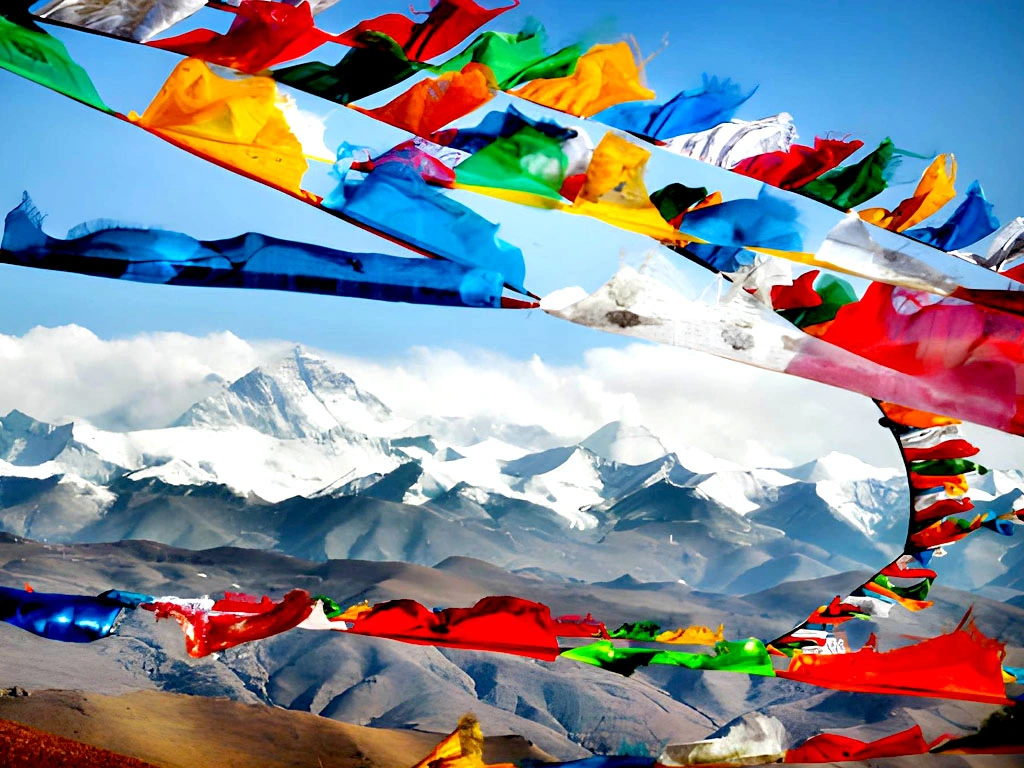
This overland journey connects Nepal and Tibet through some of the most dramatic landscapes in the Himalayas, leading to the legendary Everest Base Camp on the Tibetan side. Traveling by road allows a gradual change in scenery, culture, and altitude, offering a deeper understanding of life in the high mountains beyond what a single-country trip can provide.
Combining historic cities, remote plateaus, and views of the world’s highest peak, this journey is designed for travelers who want to experience Everest in a more accessible yet authentic way, without trekking, while enjoying the rich cultural contrasts of Nepal and Tibet.
Trip Facts
-
Kathmandu
-
Kathmandu
-
Spring, Summer & Autumn
-
Hotel & Lodge
-
Car, Jeep, & Bus
-
Overland
-
5,220 Meters
-
Breakfast Included
-
English, Spanish
-
02-25 People
-
Permits Included
-
Fully Guided Tour
Trip Overview
The Nepal & Tibet Overland Journey to Everest Base Camp is a carefully designed cross-border Himalayan experience that combines cultural depth, dramatic landscapes, and one of the world’s most iconic destinations. Rather than focusing on physical endurance or trekking, this journey follows a scenic and gradual overland route, allowing travelers to experience Everest Base Camp on the Tibetan side while also exploring the cultural heart of Tibet and the contrasting landscapes of Nepal.
The journey begins in Kathmandu, Nepal’s vibrant capital, before continuing by air to Chengdu, one of western China’s most important gateway cities. From Chengdu, travelers fly onward to Lhasa, the capital of the Tibet Autonomous Region. Arriving in Lhasa by flight provides a smooth and efficient entry into Tibet while allowing time to rest and acclimatize before beginning the overland portion of the journey.
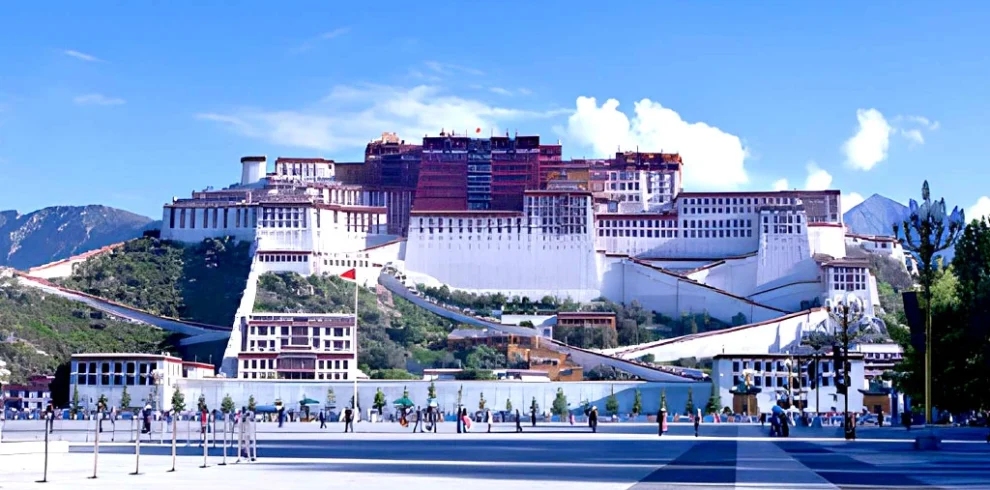
Lhasa serves as the spiritual and cultural starting point of the Tibetan experience. The city is home to some of Tibet’s most significant landmarks, including the Potala Palace, Jokhang Temple, and Barkhor Street. These sites are not simply historical monuments but living centers of Tibetan Buddhism, where pilgrims, monks, and daily rituals continue much as they have for centuries.
From Lhasa, the journey continues by road across Central Tibet, following a classic Tibet overland route through high mountain passes, fertile valleys, and wide-open plains. Historic towns such as Gyantse and Shigatse offer insight into traditional Tibetan architecture, fortress towns, and major monasteries that remain central to religious life.
A major highlight of the journey is reaching Everest Base Camp (Tibet side), accessed by vehicle rather than trekking. The drive toward Rongbuk Monastery, the highest monastery in the world, offers expansive views of the Himalayan range and the dramatic north face of Mount Everest.
Visiting Everest Base Camp in Tibet is a different experience from the trekking routes on the Nepal side. The emphasis here is not on physical challenge but on presence and observation. Travelers can spend time absorbing the vastness of the Tibetan Plateau, the silence of the high-altitude environment, and the scale of Mount Everest itself.
Gradual altitude gain is a key advantage of this overland Everest Base Camp itinerary. Moving step by step from Lhasa through Central Tibet allows the body to adapt naturally, supported by carefully planned overnight stops and lighter activity days.
After visiting Everest Base Camp, the route continues westward toward Kyirong, a scenic border region between Tibet and Nepal. This section of the journey offers a noticeable change in landscape as the plateau gradually descends and greenery begins to reappear.
Crossing the Kyirong border, travelers re-enter Nepal, marking the final transition of the journey. The return to lower elevations brings warmer temperatures, richer vegetation, and a distinct cultural shift.
Throughout the trip, travelers are accompanied by experienced drivers and professional guides. In Tibet, a licensed Tibetan guide travels with the group at all times, providing cultural interpretation and ensuring compliance with Tibet travel regulations.
Accommodation along the route reflects the realities of high-altitude travel. Comfortable hotels are used in major cities, while simpler but clean guesthouses are selected in more remote areas.
The Nepal & Tibet Overland Journey to Everest Base Camp is best suited for travelers seeking a meaningful Himalayan experience without trekking, appealing to cultural explorers, photographers, and travelers interested in iconic destinations.
More than a single destination, this journey is about connection—between Nepal and Tibet, between culture and landscape, and between modern travel and ancient traditions. Reaching Everest Base Camp after days of gradual travel across the plateau provides context and appreciation that cannot be achieved by rushing directly to the mountain.
Trip Highlights
- Flight from Kathmandu to Chengdu and onward to Lhasa for smooth entry into Tibet
- Explore Lhasa highlights including Potala Palace, Jokhang Temple, and Barkhor Street
- Scenic Tibet overland drive through Gyantse and Shigatse with monasteries and forts
- Visit Rongbuk Monastery, the world’s highest monastery with Everest north face views
- Reach Everest Base Camp on the Tibetan side by overland vehicle, no trekking required
- Cross-border overland journey connecting Nepal and Tibet across the Himalayan plateau
- Exit Tibet via Kyirong and scenic travel to Kathmandu along a dramatic Himalayan highway
Tour Itinerary
The tour itinerary presented on this website is carefully curated with special attention to altitude progression and acclimatization to ensure a safe, comfortable, and well-paced travel experience; however, minor adjustments may occasionally be required due to weather conditions, local circumstances, road conditions, or other factors beyond the control of our trusted local travel partner in Nepal. Travel to Tibet is subject to government permit and visa regulations, which may be issued, delayed, or changed at short notice. In such cases, suitable alternative cultural or trekking programs within Nepal will be arranged to ensure continuity of the journey, with all decisions made in the best interest of guest safety, comfort, acclimatization needs, and the overall quality of the travel experience.
Kathmandu, the capital of Nepal and widely known as the Temple City, serves as the starting point of your Nepal and Tibet journey and a key gateway to the Himalayan region. The city is located at an elevation of approximately 1,400 meters (4,593 feet).
Upon arrival at Tribhuvan International Airport, you will be welcomed in the arrival hall by an airport representative from Jagadamba Holidays, our appointed local partner in Nepal. The representative will be easily identifiable by a clearly displayed welcome sign bearing the name “Natura Himalaya Tours.”
You will then be transferred by private vehicle to your hotel in Thamel, Kathmandu’s main tourist district. The airport transfer covers a distance of approximately 7 kilometers and usually takes around 40 to 45 minutes, depending on traffic conditions. Upon arrival at the hotel, luggage assistance will be provided. Early check-in is subject to availability; if rooms are not immediately ready, your luggage will be securely stored. Overnight accommodation with breakfast will be provided on a twin-sharing basis in a deluxe room at Kathmandu Guest House or a similar standard hotel in Thamel.
The remainder of the day is free for leisure, allowing time to relax or explore Kathmandu’s cultural attractions at your own pace. Thamel offers a variety of cafés, local shops, and traditional streets, providing a gentle introduction to the city’s atmosphere.
In the late afternoon or early evening, you will meet the local tour coordinator, Mr. Narendra Bohara, at the hotel for a briefing session. During this meeting, your travel program will be reviewed, your local guide will be introduced, and all necessary travel formalities will be completed. Passport details and biometric information required for the Chinese Group Visa and Tibet Travel Permit will be collected in preparation for your onward journey.
After a hearty breakfast at the hotel in Kathmandu, depart by road toward Panauti (1,447 m / 4,747 ft), one of Nepal’s oldest Newari towns. Spend time exploring historic temples, traditional Newari houses, and the serene riverside surroundings before continuing the drive to Namo Buddha (1,553 m / 5,095 ft), a revered Buddhist pilgrimage site set on a scenic hilltop overlooking the surrounding valleys.
Upon arrival at Namo Buddha Monastery (Thrangu Tashi Yangtse Monastery), visit the monastery complex and learn about its spiritual significance within the Kagyu lineage of Tibetan Buddhism, closely associated with the sacred legend of Prince Mahasattva. The peaceful setting offers a moment of reflection and panoramic views across the Himalayan foothills.
From Namo Buddha, begin the scenic trek to Dhulikhel, a walk of approximately 5–6 hours following forest trails, terraced farmland, and traditional villages. The route provides a gentle introduction to trekking in Nepal, with quiet countryside, open landscapes, and occasional distant views of the Langtang Range and Rolwaling Range on clear days.
Arrive in Dhulikhel (1,552 m / 5,092 ft), a historic Newari town that once served as an important trading point between Tibet and the Kathmandu Valley. Take a short walk through the old town, observing narrow streets and finely carved wooden windows, and visit the Narayan Temple, dedicated to Lord Vishnu.
Check in at the Himalayan Horizon Hotel, a tranquil hillside retreat set above the town. From the hotel and nearby viewpoints, enjoy sunset and early-morning views over the surrounding hills and valleys, with distant Himalayan peaks visible in clear weather. This overnight stay supports gentle altitude acclimatization before continuing to higher elevations later in the journey.
With early light revealing the surrounding hills and distant Himalayan silhouettes, the trek begins from Dhulikhel toward Nagarkot (2,175 m / 7,136 ft.), offering a genuine Himalayan trekking experience close to Kathmandu without high altitude or technical difficulty. Covering approximately 15.6 km and taking 5–6 hours, this route follows the Kathmandu Valley rim, passing through pine and rhododendron forests, terraced farmland, and traditional hill villages. The peaceful countryside and fresh mountain air make it an ideal choice for travelers with limited time who still want a true taste of trekking in Nepal.
One of the main highlights of this trek is the panoramic Himalayan scenery. On clear days, the trail opens to wide views across rolling hills and deep valleys, with distant peaks of the Langtang, Gaurishankar, and Rolwaling ranges, and in exceptional conditions, major Himalayan giants such as Mount Everest, Cho Oyu, Manaslu, Annapurna, Dhaulagiri, and Shishapangma. The constantly changing landscape keeps the walk visually engaging while remaining comfortable and unhurried, suitable for a wide range of travelers.
Equally rewarding is the cultural experience along the route. Passing through small villages where daily rural life continues much as it has for generations, walkers encounter stone houses, prayer flags, and cultivated terraces that define the Himalayan foothills. The trek concludes in Nagarkot, one of the best Himalayan viewpoints near Kathmandu, renowned for its sunrise and sunset mountain views. The gentle altitude gain also supports acclimatization before journeys to higher Himalayan regions, while remaining suitable for families and first-time trekkers.
Upon arrival in Nagarkot, check in at your hotel and relax in a tranquil mountain setting. Hotel Mystic Mountain, located on a ridge at approximately 2,175 m ( 7,136 ft.), is known for its elevated position above the surrounding hills. From the hotel area and nearby viewpoints, guests may enjoy views of the eastern Himalayas on clear days, including the Langtang range and distant sections of the Everest region. Sunset and early morning are the best times to appreciate the scenery, and this overnight stay provides gentle altitude exposure ahead of higher elevations later in the journey.
Begin the day by enjoying a hearty breakfast while taking in the sunrise views over the Nepal Himalayas from your hotel in Nagarkot. As the early light reveals the surrounding hills and valleys, depart the hilltop viewpoint and begin a scenic downhill trek toward Changu Narayan, following quiet trails through forests, terraced farmland, and traditional villages. This gentle walk along the Kathmandu Valley rim blends natural scenery with everyday rural life and offers a relaxed yet rewarding start to the day.
The trail leads to Changu Narayan Temple, one of the oldest Hindu temples in Nepal and a UNESCO World Heritage Site. Dedicated to Lord Vishnu, the temple complex is renowned for its ancient stone inscriptions, finely carved sculptures, and a religious history dating back more than a millennium. Set on a peaceful hilltop, the site provides valuable insight into Nepal’s early history, Hindu traditions, and classical art, making it a significant cultural highlight of the journey.
After visiting Changu Narayan, continue by road to the historic city of Bhaktapur, once the royal capital of the Kathmandu Valley and today one of Nepal’s best-preserved medieval cities. Upon arrival, check in to your hotel and take time to refresh before heading out to explore the city. A walk through Bhaktapur Durbar Square reveals remarkable landmarks such as the 55-Window Palace, Nyatapola Temple, and Bhairavnath Temple, along with intricately carved wooden buildings that reflect classic Newari craftsmanship. Beyond the main square, Bhaktapur’s narrow lanes, traditional pottery squares, temples, and everyday street life create a living-museum atmosphere where history, culture, and daily life continue in harmony.
After exploring Bhaktapur and enjoying dinner, return to the hotel. Overnight accommodation with breakfast is arranged by the company on a twin-sharing basis in a deluxe room at New Shiva Guest House or an equivalent standard hotel in Bhaktapur.
Special Note about Tibet
In the early evening (typically between 4:00 and 5:00 PM), the group meets at the hotel in Bhaktapur for a tour briefing, during which the Chinese Group Visa and official Tibet Travel Permit are issued, completing all necessary formalities for entry into Tibet. The remainder of the evening is free for rest or personal time.
After breakfast, depart from Bhaktapur by private vehicle for Tribhuvan International Airport, Kathmandu. The transfer is scheduled to ensure arrival at the airport approximately 3 hours before the scheduled flight departure time, in accordance with standard international check-in and security requirements. The drive normally takes around 30–45 minutes, depending on traffic conditions. Assistance is provided at the airport for check-in and departure formalities.
Board the scheduled direct flight from Kathmandu (KTM) to Chengdu Tianfu International Airport (TFU). Chengdu operates on China Standard Time (UTC +8), which is 2 hours and 15 minutes ahead of Nepal Time (UTC +5:45). The average flight duration is approximately 3 to 4 hours, depending on the operating airline.
This route is typically operated by Sichuan Airlines or Air China. Sichuan Airlines generally departs at around 12:20 PM (Nepal Time) and arrives at approximately 6:15 PM (China Time), while Air China usually departs at around 12:35 PM (Nepal Time) and arrives at approximately 5:40 PM (China Time). The company will arrange and manage the Kathmandu–Chengdu flight with one of these airlines, subject to operational availability. Final airline details and confirmed timings will be provided prior to departure.
Upon arrival at Chengdu Tianfu International Airport (495 m / 1,625 ft.), complete immigration and customs formalities and meet the local representative of our Tibet travel partner in the arrivals area, appointed by our trusted South Asian travel partner, Jagadamba Holidays, in Kathmandu. You will then be transferred by private vehicle to your hotel in Chengdu.
Accommodation is arranged at Hanting Hotel Chengdu Tianfu Square (495 m / 1,625 ft.), located on Chunxi Road in the heart of Chengdu’s downtown area. The hotel offers convenient access to shopping streets, local restaurants, metro lines, and major city landmarks, including Tianfu Square. It provides clean rooms, basic modern amenities, courteous service, and breakfast options, making it a practical base before continuing the Tibet overland journey. After check-in, the remainder of the day is free to rest and recover from the journey or take a short walk in the surrounding area, depending on arrival time and personal preference.
After a hearty breakfast at the hotel in Chengdu, depart by private vehicle for Chengdu Tianfu International Airport (TFU). The transfer is arranged to ensure arrival at the airport approximately 2–3 hours before the scheduled flight departure time, in accordance with standard domestic check-in and security procedures in China. Assistance is provided for check-in and departure formalities.
Board the scheduled domestic flight from Chengdu to Lhasa Gonggar Airport (LXA). Both Chengdu and Lhasa operate on China Standard Time (UTC +8), with no time difference between the two cities. The average flight duration is approximately 2 to 2.5 hours, offering views of the Tibetan Plateau on clear days.
This route is typically operated by Sichuan Airlines or Air China. Sichuan Airlines Flight 6635 usually departs at 12:30 and arrives in Lhasa at 15:00, while Air China Flight 2531 generally departs at 13:15 and arrives at 15:55. The company will arrange and manage the Chengdu–Lhasa flight, subject to operational availability. Final airline details and confirmed timings will be provided prior to departure.
Upon arrival at Lhasa Gonggar Airport, meet the local Tibetan guide and driver in the arrivals area. You will then be transferred by private vehicle to your hotel in Lhasa, a drive of approximately 1 to 1.5 hours along the Yarlung Tsangpo River valley.
Overnight accommodation with breakfast is arranged by the company at Lhasa Dhood Gu Hotel, located at No. 19 Shasarsu Road, Trom Si Khang, Lhasa, in a central area with convenient access to shops, restaurants, and key cultural sites. Rooms are comfortable and simply furnished, with essential modern amenities, providing a restful environment for acclimatization at 3,650 m (11,975 ft). The remainder of the day is kept light to allow the body to adjust gradually to the altitude.
After a hearty breakfast at the hotel in Lhasa, begin the first day of sightseeing in the historic and spiritual heart of the city, the capital of Tibet, situated at approximately 3,600 meters (11,811 feet) above sea level. Today’s exploration focuses on Lhasa’s most important cultural and religious landmarks, all located within the walkable old Tibetan quarter. Visiting Jokhang Temple, Barkhor Street, and the Potala Palace on foot allows for a deeper connection with the rhythm of local life. This day highlights living Tibetan Buddhism, centuries-old pilgrimage traditions, and the iconic architectural heritage of one of Asia’s highest capitals.
Begin the day with a visit to Jokhang Temple, widely regarded as the holiest shrine in Tibetan Buddhism and the spiritual heart of Lhasa. This sacred site draws pilgrims from across the Tibetan Plateau, who come to offer prayers and perform traditional ritual circumambulations. Pilgrims from across the Tibetan Plateau arrive daily, many performing full-body ritual prostrations and slowly circumambulating the temple in acts of devotion. Inside, the atmosphere is deeply spiritual, with flickering butter lamps, ancient chapels, sacred images, and the continuous murmur of prayers bearing witness to more than a thousand years of uninterrupted religious practice.
From Jokhang Temple, continue walking along Barkhor Street, the traditional pilgrimage circuit that encircles the temple. This historic kora is both a sacred religious pathway and a vibrant local marketplace. Pilgrims, monks, and local residents share the street, creating a lively atmosphere shaped by turning prayer wheels, drifting incense, fluttering prayer flags, and small shops offering Tibetan handicrafts, sacred items, and everyday goods. Walking the Barkhor offers an authentic glimpse into daily life in Lhasa’s old Tibetan quarter, where spiritual practice and commerce have coexisted for centuries.
Later in the day, visit the iconic Potala Palace, dramatically rising above the city skyline and dominating the landscape of Lhasa. Once the winter residence of the Dalai Lamas, this UNESCO World Heritage Site is one of the most important symbols of Tibetan identity. Exploring its grand stairways, ceremonial halls, chapels, and richly decorated interiors provides insight into Tibet’s religious governance, monastic traditions, and sacred art. The remainder of the afternoon is free for rest or quiet reflection, allowing time to absorb the cultural and spiritual richness of a full day spent in the heart of Lhasa.
After a hearty breakfast at the hotel in Lhasa, continue sightseeing beyond the historic core to explore the city’s outer monastic zone, home to some of the most influential monasteries in Tibetan Buddhism. Today’s journey focuses on Lhasa’s great monastic institutions and royal heritage sites, offering deeper insight into religious education, philosophical debate, and the daily lives of monks. Visits include Drepung Monastery, Sera Monastery, and Norbulingka, located on the outskirts of the city and set against open landscapes and mountain backdrops.
Begin the day with a visit to Drepung Monastery, once the largest monastery in the world and one of the most important centers of Buddhist learning in Tibet. Founded in the 15th century, Drepung was home to thousands of monks and played a central role in Tibet’s religious and political history. Exploring its vast complex of assembly halls, colleges, chapels, and monks’ quarters offers a powerful impression of monastic life on a grand scale, along with sweeping views over the Lhasa Valley.
Continue to Sera Monastery, renowned for its lively monk debate sessions, a unique and visually striking tradition of Tibetan Buddhist education. In the monastery’s shaded courtyards, monks engage in animated philosophical discussions using expressive hand gestures and rapid exchanges. Observing these debates provides rare insight into the methods of learning, discipline, and intellectual rigor that define Tibetan monastic training and spiritual practice.
Later in the day, visit Norbulingka, the former summer residence of the Dalai Lamas and a UNESCO World Heritage Site. Set within expansive gardens, pavilions, and palace buildings, Norbulingka offers a contrasting perspective on Tibetan history, combining royal life with religious tradition. The remainder of the afternoon is free for rest or quiet reflection, allowing time to absorb the spiritual, cultural, and historical richness of a full day spent exploring Lhasa’s monastic heart.
After breakfast at the hotel in Lhasa, depart along the historic Friendship Highway, one of the most scenic overland routes in Tibet. The journey follows the Kyichu River, a tributary of the Yarlung Tsangpo, gradually leaving the Lhasa Valley and opening onto wide plateau landscapes and distant snow-capped peaks that define central Tibet.
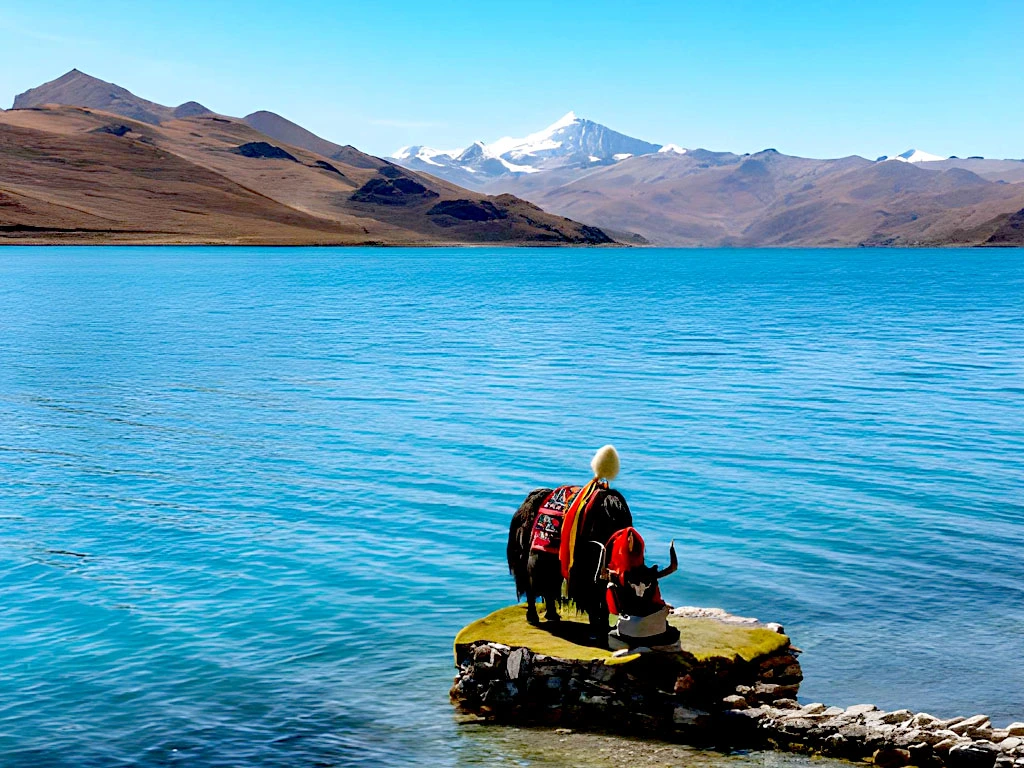
The first major highlight is Yamdrok Tso Lake, a sacred alpine lake renowned for its striking turquoise-blue color. The lake lies at an elevation of approximately 4,447 m (14,590 ft) and is first revealed from Khamba La Pass (around 4,794 m), offering panoramic views across the lake and surrounding mountains. On clear days, the snow-covered peak of Nojin Kangtsang (over 7,000 m) rises prominently in the distance.
Descending from the pass, the road skirts the shores of Yamdrok Lake before reaching the small settlement of Nakartse, where a short stop may be made. Nearby, a brief detour leads to Samding Monastery, dramatically positioned above the plains and offering sweeping views of the surrounding landscape.
Continuing westward, the route climbs toward Karo La Pass (approx. 5,045 m), situated beneath the massive slopes of Nojin Kangtsang. Here, glaciers descend close to the roadside, providing one of the most impressive and accessible glacial views along the Friendship Highway.
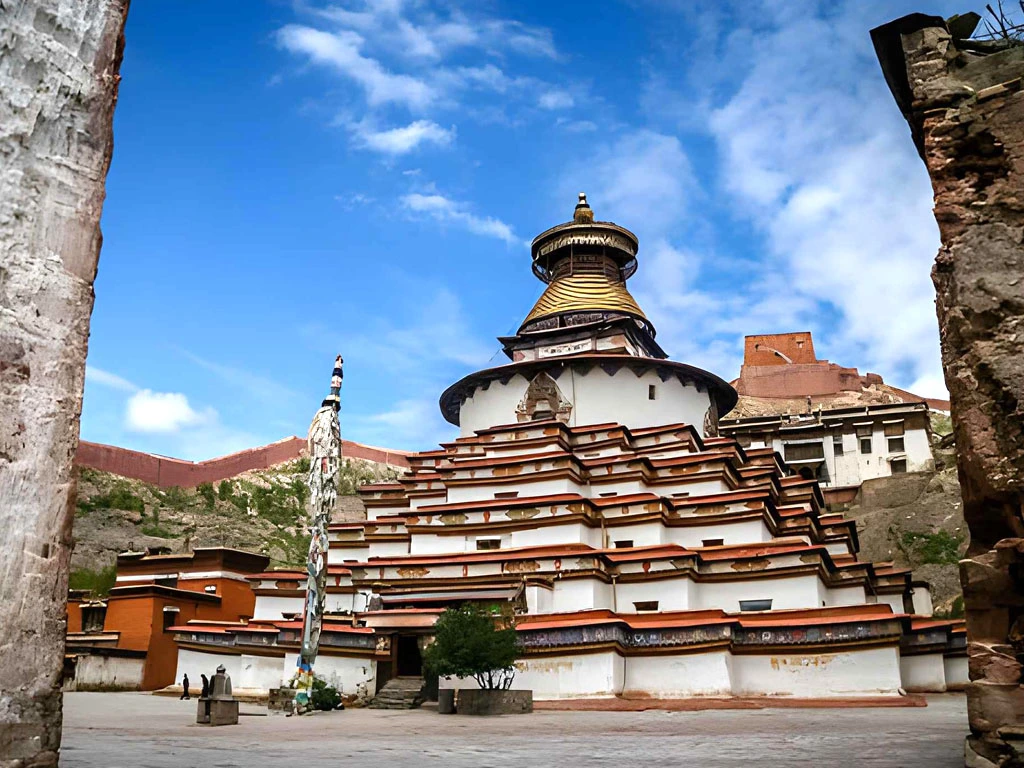
From Karo La Pass, descend toward Gyantse, one of Tibet’s most historically significant towns, located at an elevation of approximately 4,025 m (13,210 ft). Dominating the skyline is the Gyantse Dzong, a well-preserved hilltop fortress, while nearby stands the Gyantse Kumbum Stupa, a multi-tiered structure within the Pelkor Chode Monastery, dating back to the 15th century and renowned for its chapels and murals. The journey covers a distance of approximately 260 km and takes around 5–6 hours by road.
Arrive in Gyantse (Gyantse: 3,977 m (13,048 ft) in the afternoon and check in to the hotel. The remainder of the day is free for rest and acclimatization. Overnight accommodation with breakfast is provided on a twin-sharing basis in a standard room at Gyantse Hotel or a hotel of similar standard.
After a hearty breakfast at the hotel in Gyantse, begin the short and scenic journey to Shigatse, passing through fertile valleys where wheat and barley are traditionally cultivated. This region forms the heart of the historic Tsang area, once an important political and cultural center of Tibet. Today, Shigatse is the second-largest city in Tibet, with a population of over 100,000, blending modern development with strong religious traditions.
Upon arrival in Shigatse, visit Tashilhunpo Monastery, one of the six major monasteries of the Gelugpa (Yellow Hat) sect of Tibetan Buddhism. Founded in 1447, it is the traditional seat of the Panchen Lamas, the second-most influential lineage in Tibetan Buddhism after the Dalai Lama. The monastery complex houses the tombs of the 5th to 10th Panchen Lamas and remains an important pilgrimage site for Tibetans from across the plateau.
Walk the 1.6 km (1 mile) pilgrimage circuit that encircles the monastery, lined with prayer wheels and offering panoramic views of Tashilhunpo Monastery and Shigatse city. Visiting in the early morning provides the best opportunity to observe monastic life and local pilgrims in prayer.
Nearby stands the Shigatse Dzong, originally built in the early 17th century and reconstructed between 2005 and 2007 on the original site after its destruction in the 1960s. Although rebuilt in traditional architectural style, visitor access may be limited.
Before returning to the hotel, take time to explore Shigatse Walking Street, located close to Tashilhunpo Monastery, where local shops, tea houses, and small restaurants offer insight into daily Tibetan life. Although designated as a pedestrian zone, caution is advised due to occasional vehicle traffic.
The surrounding countryside between Gyantse and Shigatse is one of Tibet’s most fertile farming regions, and depending on the season, travelers may observe Tibetan farmers working the fields with yaks and horses, adding authenticity to the journey. The drive covers approximately 90 km and takes around 2 to 3 hours, depending on road and traffic conditions.
Arrive in Shigatse, situated at an elevation of approximately 3,900 m (12,795 ft), in the late afternoon or early evening. After hotel check-in, enjoy a relaxed stroll through the old quarter and local markets, offering insight into traditional trade practices and everyday life. The remainder of the evening is kept free for rest and acclimatization. Overnight accommodation is provided on a twin-sharing basis in a standard room at Shigatse Wutse Grand Hotel or a hotel of similar standard.
After a hearty breakfast at the hotel in Shigatse, depart for Xegar (New Tingri), continuing the journey across the high Tibetan Plateau. This long yet scenic overland drive passes through expansive plains, broad valleys, and remote high-altitude terrain, highlighting the vastness and solitude that characterize western Tibet. As the route progresses, the landscape becomes increasingly open and rugged, with distant mountain ridges and sparse settlements reinforcing the region’s remote character.
En route, cross Gyatchu La Pass (5,220 m), one of the highest passes along the journey. From the pass, panoramic views extend across the plateau, revealing rolling highland terrain, windswept grasslands, and occasional nomadic grazing areas, offering a classic impression of Tibet’s stark and unspoiled interior.
Continuing westward toward Xegar (New Tingri), the drive traverses a striking mix of broad river basins, open valleys, and elevated plateau landscapes shaped by extreme altitude and climate. Traveling via Sakya, the distance from Shigatse to Xegar is approximately 270 km, and the journey typically takes around 6–7 hours, depending on road conditions, weather, and short stops along the way. The steady pace of this route is well suited to high-altitude travel and emphasizes the vast, remote nature of western Tibet.
Arrive in Xegar (New Tingri) in the late afternoon or early evening, situated at an elevation of approximately 4,300 m (14,108 ft). After hotel check-in, the remainder of the day is kept free for rest and acclimatization. Overnight accommodation with breakfast is provided on a twin-sharing basis in a standard room at Tingri Everest Shanghai Hotel or a hotel of similar standard.
After breakfast in Kyirong, depart and begin the ascent onto the Tibetan Plateau, marking a clear transition in both altitude and landscape. The road climbs steadily through high mountain passes, with views gradually opening across vast, windswept plains that define the plateau. As elevation increases, vegetation becomes sparse and the sense of remoteness intensifies, offering a first true impression of Tibet’s dramatic high-altitude environment.
En route, stop at Pelku Tso Lake, a striking alpine lake renowned for its deep turquoise waters set against a backdrop of barren hills and distant snow-capped peaks. The lake provides an excellent opportunity for short walks, photography, and quiet observation of the plateau’s unique atmosphere. Along the journey, pass scattered nomadic settlements, yak pastures, and herder camps, offering insight into traditional Tibetan highland life shaped by altitude, climate, and centuries-old pastoral traditions.
Weather permitting, enjoy distant panoramic views of Cho Oyu (8,188 m) and Shishapangma (8,027 m), two of the world’s fourteen eight-thousand-meter peaks. By late afternoon, arrive in New Tingri (Xegar), situated at an elevation of approximately 4,300 meters (14,108 feet). This overnight stop plays an important role in gradual acclimatization as the journey continues deeper into Tibet. The drive follows the southern highway route, covering a distance of approximately 265 kilometers and taking around 5 to 6 hours, depending on road and weather conditions.
Upon arrival in Xegar (New Tingri), check in to your hotel and spend the evening at leisure, allowing time to rest after the long drive and adjust to the altitude. Overnight accommodation with breakfast is provided on a twin-sharing basis in a standard room at Tingri Everest Shanghai Hotel or a hotel of similar standard.
After a hearty breakfast at the hotel in Xegar (New Tingri), depart for Kyirong, beginning the overland journey from the high Tibetan Plateau toward the greener valleys near the Nepal–Tibet border. This scenic drive gradually descends from vast, windswept plateau landscapes into more sheltered terrain, offering a changing panorama of open plains, distant mountain ridges, and increasingly varied scenery as altitude decreases.
During the drive, cross two spectacular high mountain passes: Thong La Pass (5,050 m / 16,568 ft) and Lalung La Pass (5,082 m / 16,668 ft). These passes provide some of the most dramatic viewpoints of the journey, opening wide views across the Himalayan range and the remote plateau below. From these elevated vantage points, weather permitting, enjoy magnificent views of Mount Everest (8,848 m / 29,028 ft) and Shishapangma (8,013 m / 26,289 ft), two of the world’s highest peaks dominating the horizon.
Continuing onward toward Kyirong, the route highlights a striking contrast in landscapes, shifting from barren highlands to greener valleys influenced by lower elevation and forested slopes. The journey from Xegar to Kyirong covers a distance of approximately 265 kilometers and takes around 6 to 7 hours, depending on road and weather conditions, allowing for a steady pace well suited to high-altitude travel.
Arriving in Kyirong in the late afternoon or early evening, situated at an elevation of approximately 2,900 meters (9,514 feet), check in to your hotel and enjoy the remainder of the day at leisure to rest and acclimatize after the long drive. Overnight accommodation with breakfast is provided on a twin-sharing basis in a standard room at Hotel Xixapangma or a hotel of similar standard.
The final day begins after breakfast in Kyirong, Tibet, as the journey departs from Tibet and heads toward the Rasuwagadhi border in Nepal, marking the conclusion of the Tibetan portion of the trip. The drive from Kyirong to the border covers a distance of approximately 25 kilometers, passing through scenic mountain valleys before reaching the official border point. Exit formalities are completed on the Tibetan side, followed by immigration and customs procedures upon re-entering Nepal.
After completing border formalities at Rasuwagadhi, the journey continues by road toward Kathmandu via Syabrubesi, descending gradually from the high Himalayan border region into lower elevations. This section of the drive covers a distance of approximately 136.5 kilometers, passing through river valleys, forested hills, rural settlements, and winding mountain roads that reflect the changing landscapes of northern Nepal.
The total driving time for the day is approximately 8–9 hours, depending on road conditions and traffic. After a long day of travel, arrival in Kathmandu (1,400 meters / 4,593 feet) is expected in the evening. Upon arrival, travelers check in to their hotels and enjoy the remainder of the evening at leisure, bringing the Nepal–Tibet overland journey to a smooth and reflective conclusion. Overnight accommodation with breakfast is provided on a twin-sharing basis in a deluxe room at Kathmandu Guest House or a hotel of similar standard in Thamel.
As your remarkable adventure through the Himalayas comes to a close, take a moment to reflect on the awe-inspiring landscapes, rich cultural heritage, and unforgettable experiences that have defined your journey. From towering mountain scenery to the warm hospitality of local communities, each step has created lasting memories of connection and discovery in Nepal.
Airport Transfer Arrangement
For a smooth and stress-free departure, a representative of our trusted local partner in Nepal will meet you at your hotel approximately 3.5 hours before your scheduled flight. The team will ensure a reliable and comfortable transfer to Tribhuvan International Airport, allowing you to conclude your Nepal experience with ease and peace of mind.
We sincerely thank you for traveling with us and look forward to welcoming you again on future journeys across the Himalayas and beyond.
What’s Included & What’s Not Included
Cost Includes
- All transfers within Nepal are included as per itinerary
- Any domestic flight of Nepal as per trekking itinerary
- Trekking accommodation (hotel, lodge and/or tent) as per itinerary
- Small shared room with shared bathroom during trek in Nepal
- In Kathmandu and/or Pokhara: Stay at ***Hotel with breakfast
- Luggage for porters during the trek (12.5 kg/person)
- 3 meals (Breakfast, Lunch and Dinner) during the trek
- Unlimited tea or coffee for breakfast during the trek
- An English speaking guide (trekking/tour) as per Itinerary
- Travel insurance for trekking staff (guides and porters)
- All expenses of trekking staff(s) during trekking
- Conservation/National park entry fees as per itinerary
- Any special trekking/climbing permits as per itinerary
- Sightseeing / Wildlife tours if included in the itinerary
- Farewell dinner in Kathmandu before returning home
Cost Excludes
- Single room/single tent surcharge (on request)
- Round trip/one way international flight ticket to Nepal.
- Tourist visa for Nepal (30-50 $, depending on length of stay)
- Personal Insurance (covers: Trip/flight cancellation, helicopter rescue)
- Meals (lunch, dinner) at hotels in Kathmandu, Pokhara and other cities
- Gratuity for trekking staff (recommended: 9€ /10$ per traveler per day)
- Drinks (soft, hot or mineral/boiled water) during the lodge trek
- Any personal trekking and/climbing equipment for trekking in Nepal
- Hotel expenses in case of early return from trekking for any reason
- Costs due to flight cancellations & extra porters/horses during the trek
- Any additional service and KTM – Lukla helicopter shuttle flight cost
- Additional costs incurred due to any reason beyond Jagdamba’s control
- More evidence about pandemics like COVID-19 if needed in the future.
- Personal expenses during the trek (phone, wifi, shower, charging etc.)
- Other costs and things that are not mentioned in the service inclusion
Essential Trip Information
A Tibet overland tour is not a trekking expedition. Most of the journey is done by private vehicle, with sightseeing, monastery visits, and short walks.
You do not need special training, but a basic level of fitness and good general health will help you feel more comfortable, especially at higher altitudes.
Yes. Many travelers visit Tibet for the first time without prior high-altitude experience. What matters most is proper itinerary planning.
This tour is designed with gradual altitude gain and acclimatization stops, making it suitable for first-time high-altitude travelers.
Acclimatization is essential in Tibet due to its high elevation. Poor planning can cause discomfort and fatigue.
The itinerary includes gradual ascent, well-spaced overnight stops, and lighter activity days to help your body adjust naturally.
Altitude sickness can affect anyone, regardless of age or fitness, which is why travelers often worry about it.
Most symptoms are mild and manageable. Your guide is trained to monitor health conditions and respond quickly if any issues arise.
Group size affects comfort, flexibility, and personal attention during the journey.
Groups are generally small to medium-sized. This allows better interaction with the guide and smoother travel. Private tours are also available.
Solo travelers often wonder if they will feel comfortable joining a group in a remote destination.
Yes, solo travelers are very welcome. Many guests join alone and enjoy the shared experience, or they may opt for a private tour.
Different travelers have different expectations, especially when altitude and long driving days are involved.
The tour suits couples, friends, and families with older children. Private groups benefit from flexible pacing and customized arrangements.
Accommodation standards vary across Tibet due to limited infrastructure in remote areas.
In major cities, hotels are comfortable and well-equipped. In remote locations, guesthouses are simpler but clean and chosen as the best available.
Overland travel in Tibet involves long distances, so driving time is an important consideration.
Daily drives usually range from 4 to 8 hours. Roads are mostly paved, though some sections can be rough in remote areas.
Long drives at altitude may sound challenging, especially for first-time visitors.
The journey includes frequent breaks, scenic stops, and a relaxed pace, making the experience comfortable rather than exhausting.
Traveling in Tibet requires professional support due to regulations and geography.
You will be accompanied by experienced drivers and knowledgeable local guides. In Tibet, a licensed Tibetan guide travels with you throughout.
Clear communication is essential for understanding culture, logistics, and safety.
Yes, an English-speaking guide will accompany you, providing explanations, coordination, and assistance throughout the tour.
Safety is a common concern for travelers unfamiliar with the region and its regulations.
Both Tibet and Nepal are safe when visited on an organized tour. Travel in Tibet is regulated, which ensures structured and secure movement.
Food availability varies depending on location, especially in remote areas.
Meals include Tibetan, Nepali, Chinese, and simple international dishes. Breakfast is usually provided at hotels, with restaurants used for other meals.
Travelers with dietary needs often worry about limited food choices.
Vegetarian meals are generally available in cities and towns. Options may be limited in remote areas, but guides assist whenever possible.
Tibet has special travel regulations that can seem complicated for first-time visitors.
Yes, special permits are required, and all necessary permits are arranged by us as part of the tour.
Many travelers want reassurance that everything will be handled smoothly after booking.
Once confirmed, all major arrangements are taken care of, including permits, accommodation, transport, and guiding services.
Financial clarity and protection are important before confirming an international trip.
You will receive an official invoice. Travel insurance covering cancellation, medical care, and evacuation is strongly recommended.


Write a Review